Introduction
Narendra Modi is one of the most influential political leaders in contemporary India. Serving as the Prime Minister of India since 2014, he has transformed the political landscape through governance reforms, infrastructure development, digital initiatives, and global diplomacy. His rise from a modest background in Gujarat to the highest elected office in India is among the most remarkable journeys in Indian politics.
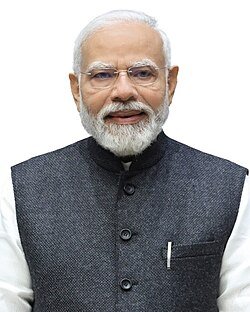
Early Life and Education
Narendra Damodardas Modi was born on 17 September 1950 in Vadnagar, Gujarat. He grew up in a modest family and became associated with the Rashtriya Swayamsevak Sangh (RSS) at a young age. His early experiences in social and organizational activities shaped his leadership style and political outlook.
He later pursued higher education in Political Science and gradually dedicated himself to public service and organizational work.
Entry into Politics
Modi's political journey accelerated through his work with the RSS and later with the Bharatiya Janata Party (BJP). During the 1980s and 1990s, he played a significant role in strengthening the BJP's organizational structure in Gujarat and across India. His strategic skills and grassroots engagement earned him recognition within the party.
Chief Minister of Gujarat (2001–2014)
In 2001, Narendra Modi became the Chief Minister of Gujarat. During his tenure, Gujarat experienced rapid industrial growth, infrastructure development, and investment initiatives. Programs such as Vibrant Gujarat attracted national and international attention.
His administration became widely known for its focus on economic development, industrialization, and governance reforms.
Prime Minister of India
In the 2014 General Election, Narendra Modi led the Bharatiya Janata Party to a historic parliamentary majority and became Prime Minister of India. The election marked a significant shift in Indian politics and established Modi as a national leader.
Following re-election in 2019 and 2024, he became one of India's longest-serving Prime Ministers and the longest-serving Prime Minister outside the Indian National Congress.
Major Initiatives and Reforms
Digital India
A nationwide initiative aimed at increasing digital access, e-governance, and technology-driven public services.
Make in India
A flagship program designed to promote manufacturing, innovation, and investment within India.
Swachh Bharat Mission
A nationwide cleanliness campaign focused on sanitation, waste management, and public hygiene.
Infrastructure Development
Expansion of highways, railways, airports, metro systems, and digital infrastructure across the country.
International Diplomacy
Modi has actively engaged with global leaders and strengthened India's strategic partnerships with major nations around the world.
Leadership Style
Narendra Modi is known for his strong communication skills, extensive public outreach, and direct engagement with citizens through initiatives such as Mann Ki Baat. His leadership emphasizes governance reforms, technology adoption, national development, and global positioning of India.
Public Image
Throughout his tenure, Modi has maintained high public visibility and significant political influence. Supporters view him as a transformational leader focused on development and national progress, while critics debate aspects of his policies and governance approach.
Conclusion
Narendra Modi's journey from a small town in Gujarat to becoming the Prime Minister of India reflects determination, organizational skill, and political leadership. He remains one of the most consequential political figures in modern Indian history.