Introduction
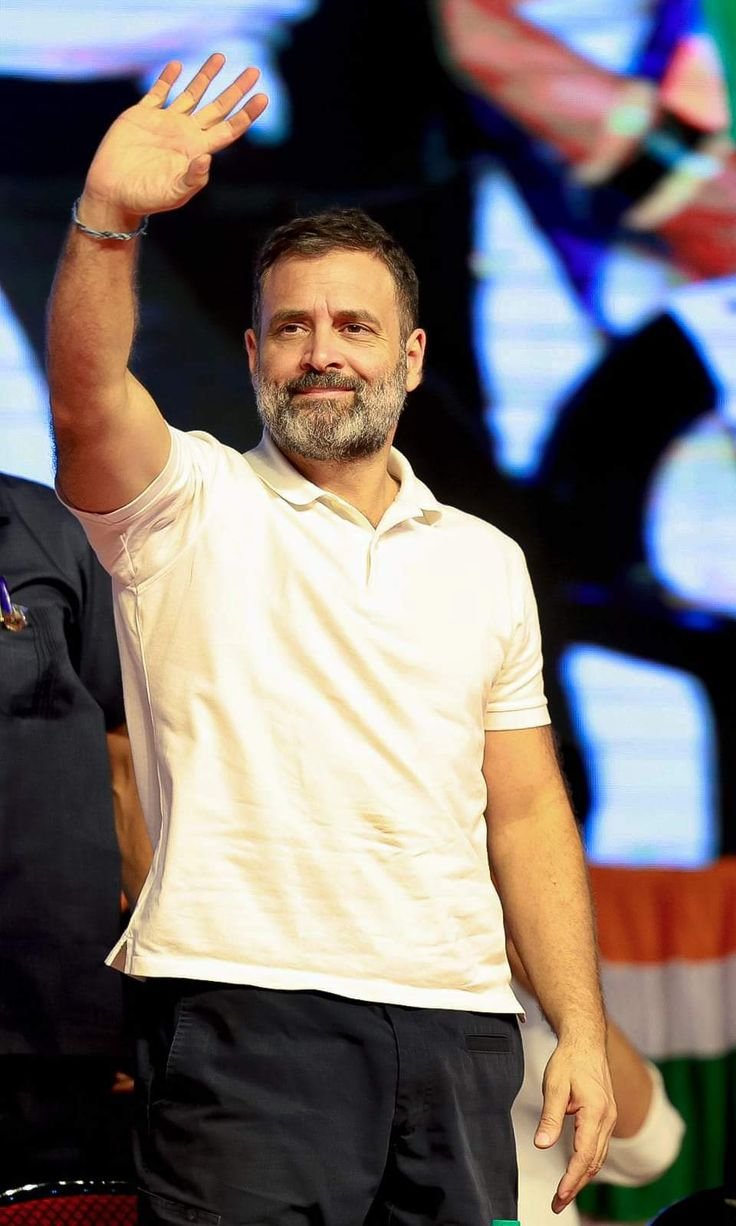
Rahul Gandhi is one of the most prominent leaders of the Indian National Congress and an important face of opposition politics in India. He is currently serving as the Leader of Opposition in the Lok Sabha and represents Rae Bareli, Uttar Pradesh. His political journey includes youth leadership, parliamentary work, national campaigns, Bharat Jodo Yatra and a continuous focus on social justice, democracy, employment and constitutional values.
Early Life and Family Background
Rahul Rajiv Gandhi was born on 19 June 1970 in New Delhi. He belongs to the Nehru-Gandhi family, one of the most influential political families in India. He is the son of former Prime Minister Rajiv Gandhi and Sonia Gandhi, and the grandson of former Prime Minister Indira Gandhi. His family background placed him close to Indian politics from an early age, but his childhood and education were largely kept away from public attention due to security concerns.
Education and Early Career
Rahul Gandhi studied at institutions including The Doon School, Rollins College and Trinity College, Cambridge. Before entering full-time politics, he worked in the private sector and later returned to India. His educational and professional exposure helped shape his understanding of governance, development and modern political communication.
Entry into Politics
Rahul Gandhi formally entered politics in 2004 when he contested the Lok Sabha election from Amethi, Uttar Pradesh. He won the seat and became a Member of Parliament. His entry was seen as an important moment for the Congress party, especially among young voters and traditional Congress supporters.
Role in Indian National Congress
Rahul Gandhi has served in several important roles within the Indian National Congress. He worked to strengthen the Indian Youth Congress and the National Students Union of India. He later became Congress vice-president and then served as president of the Indian National Congress from 2017 to 2019. During this period, he focused on youth participation, internal organisation, social justice and political mobilisation.
Parliamentary Journey
Rahul Gandhi represented Amethi from 2004 to 2019 and later represented Wayanad in Kerala. In the 2024 Lok Sabha election, he won from Rae Bareli, Uttar Pradesh. His parliamentary career has included participation in debates, committee work and raising issues related to farmers, unemployment, women empowerment, social justice and constitutional rights.
Bharat Jodo Yatra
One of the most significant phases of Rahul Gandhi’s recent political journey was the Bharat Jodo Yatra. The campaign aimed to promote unity, harmony and dialogue across India. Through this yatra, Rahul Gandhi connected with citizens, youth, workers, farmers, women and civil society groups. It also gave the Congress party renewed visibility at the national level.
Bharat Jodo Nyay Yatra
Rahul Gandhi also led the Bharat Jodo Nyay Yatra, focusing on justice, employment, social equality and democratic rights. The yatra highlighted issues such as economic inequality, youth unemployment, farmers’ concerns, caste census and representation of weaker sections.
Leader of Opposition in Lok Sabha
After the 2024 general election, Rahul Gandhi became the Leader of Opposition in Lok Sabha. This role made him one of the most important parliamentary voices against the ruling government. As Leader of Opposition, he has focused on accountability, democratic debate, constitutional values and public issues.
Political Vision
Rahul Gandhi’s political vision generally focuses on social justice, protection of the Constitution, youth employment, women empowerment, farmers’ rights, economic equality and strengthening democratic institutions. His speeches often raise concerns about inequality, unemployment, centralisation of power and institutional independence.
Public Image
Rahul Gandhi has a mixed but highly visible public image. Supporters view him as a leader who speaks about democracy, equality and constitutional values, while critics question his political strategy and leadership style. Despite criticism, his role in national opposition politics has grown significantly after the 2024 Lok Sabha election.
Conclusion
Rahul Gandhi’s political journey reflects persistence, public engagement and a long association with Indian parliamentary democracy. From Amethi to Wayanad and Rae Bareli, from Congress organisation to Leader of Opposition, his role remains important in understanding modern Indian politics.
Important Links
Read more political profiles and leadership stories on Priyanka Chauhan Blogs.